Hi.
Take a seat around the campfire, relax and join the Hiker Trash Husbands for some adventures!
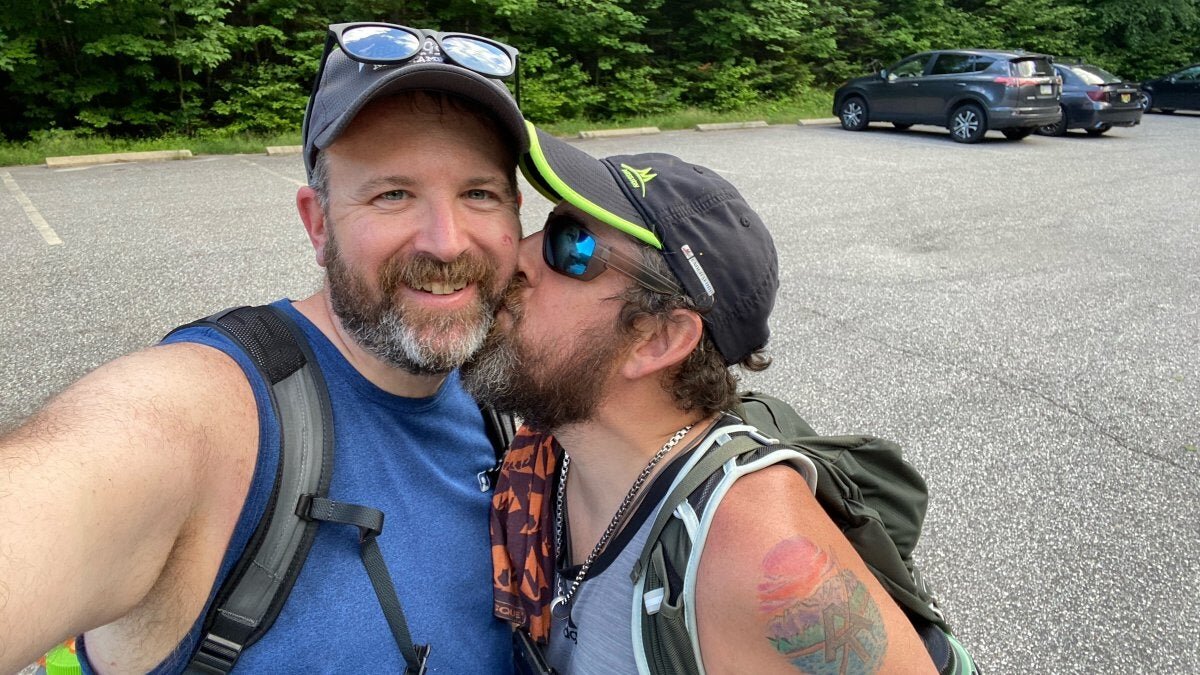
Take a seat around the campfire, relax and join the Hiker Trash Husbands for some adventures!
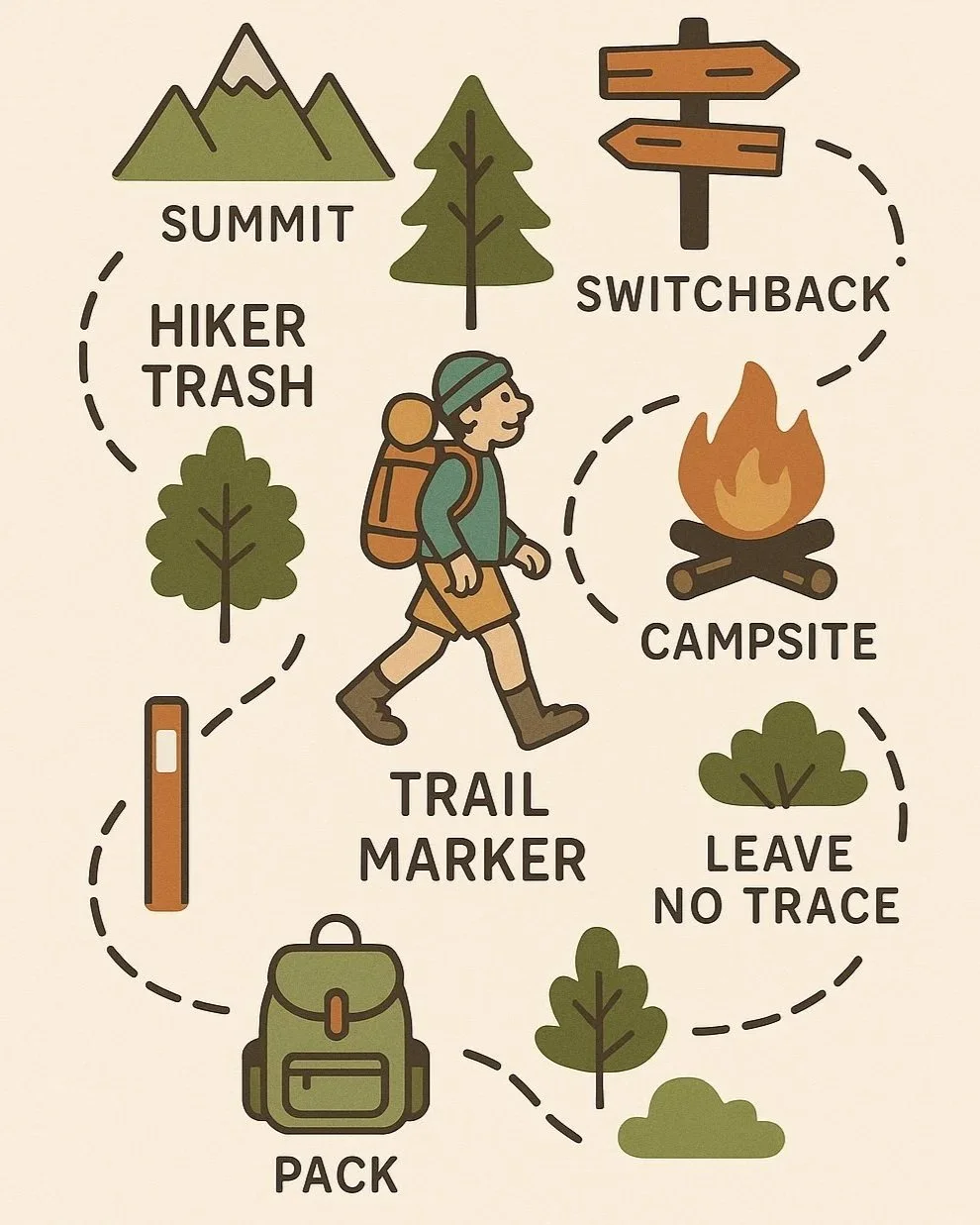
Hiking Terms and Hiker Trash Explained
Welcome to our Hiking Term Glossary! Whether you’re new to hiking, planning a thru-hike, or just curious about the unique language of the trail you find on our website, this guide breaks down all the essential terms, slang, and phrases every hiker should know. From “hiker trash” to “leave no trace,” we cover everything to help you understand the hiking world better and prepare for your next adventure. Perfect for hikers of all levels exploring the Catskills, White Mountains, Appalachian Trail, and beyond.
A guide to the hiking lingo, slang, and inside jokes we use on the trail and here on our site.
Approach Trail - A trail that leads to the official start of a long-distance hike or connects to the main route. For example, some hikers take an approach trail to get to the Appalachian Trail.
AT (Appalachian Trail) – A 2,190+ mile National Scenic Trail stretching from Georgia to Maine. A thru-hiker’s rite of passage and the place where many hikers earn their “trail legs.”
Alpine Zone – The area above tree line where conditions are too harsh for most trees to grow, often home to low shrubs, moss, and incredible views.
Backcountry – Remote, undeveloped areas far from roads and facilities. Where the real adventure begins.
Bail - To end a hike earlier than planned, often due to weather, injury, or just being done.
Base Weight – The total weight of your pack without food, water, or fuel. The number every ultralight hiker obsesses over.
Blaze – A painted mark or sign on a tree, rock, or post that tells you you’re on the right trail. Colors can indicate specific trails.
Blowdown – Fallen trees or branches blocking a trail, usually caused by storms or high winds.
Bushwhack / Bushwhacking / Off-trail Hiking – Traveling off-trail through vegetation. Fun in theory, scratchy in reality.
Camel Up - Drinking a lot of water at a source so you can carry less between stops.
Campsite – A designated or chosen spot where hikers pitch a tent, set up a hammock, or roll out a sleeping pad for the night. Campsites may be official with amenities like fire rings and bear boxes, or backcountry spots chosen for their flat ground, safety, and proximity to water (but still following Leave No Trace rules).
Cat Hole – A small hole dug to bury human waste when no facilities are available. Always 200 feet from water, trails, and campsites.
Catskill 3500 – A list of the 35 Catskill Mountains peaks above 3,500 feet, often completed as a challenge by hikers.
Cairn – A human-made pile of rocks used to mark a trail.
Day Hike – A hike completed in one day without overnight camping.
Devil’s Path – An infamous, rugged trail in the Catskills, known for steep climbs and knee-buckling descents.
Elevation Gain – The total vertical feet you climb during a hike. The number that determines whether you’ll be out of breath.
Exposure - A steep or dangerous section where a fall could have serious consequences. Often mentally challenging for hikers with a fear of heights.
Family-Friendly Hike – A trail that’s safe, generally shorter, and manageable for hikers of a wide range of ages and abilities.
Flip-Flop – A thru-hiking strategy where hikers start somewhere in the middle of a long trail, then hike in both directions to finish.
GA-ME / NOBO - "Georgia to Maine" — hiking the Appalachian Trail northbound from Springer Mountain, GA, to Katahdin, ME.
Herd Path - An unofficial, often faint trail created by repeated hiker trampling over time.
Hiker Midnight – Often 8:00 to 9:00 PM. The time most hikers are already asleep.
Hiker Trash – A term of endearment among hikers for those who have fully embraced the dirt, sweat, and nomadic trail life. It’s about choosing adventure over appearances, living simply, and wearing the same shirt for far too many days. Around here, it’s also a badge of honor.
Hiking Trailhead - The starting point for a hike, typically marked and with parking.
Krummholz – A stunted, wind‑blasted zone of trees found near or just above treeline, where harsh alpine wind, ice, and snow twist and prune evergreens into low, tangled, almost shrub‑like shapes.
Leave No Trace (LNT) – A set of principles that encourage responsible outdoor ethics to protect natural areas.
Long Path – A 358-mile trail running from New York City to the Adirondacks.
Microspikes – Lightweight traction devices that slip over boots for icy trail conditions.
Nero Day - “Nearly zero” miles — a short hiking day, often because you’re hiking into or out of a trail town.
NH 48 - Climbing the 48 mountain peaks in New Hampshire over 4,000 feet in elevation.
NOBO / SOBO – Northbound or Southbound hiking directions on long trails like the AT.
Northville–Placid Trail – A 138-mile hiking trail in the Adirondack Park of New York.
Pack - Your backpack.
PCT (Pacific Crest Trail) – A 2,650-mile National Scenic Trail from Mexico to Canada, famous for its stunning mountain views and soul-crushing desert sections.
Peakbagger - A hiker aiming to summit a specific list of peaks, such as all Catskill 3500 peaks.
Peakbagging – Climbing to the summit of multiple mountains on a list, like the Catskill 3500 Club or the New England 4,000-Footers.
Peak Canister - A mailbox-like registration container found at designated trail summits for hikers to log their ascent.
Pemi Loop – A challenging 31-mile loop in New Hampshire’s White Mountains that climbs eight 4,000-foot peaks.
Postholing - Sinking deep into snow with each step — common when hiking without snowshoes in soft snow.
PUDs (Pointless Ups and Downs) - Hiker slang for trail sections that seem to climb and descend without any obvious reason or reward.
Resupply – Restocking food and supplies during a long hike. Sometimes a gas station pizza is the best meal you’ve ever had.
Road Walk – A section of a trail that follows a paved or gravel road instead of a footpath.
Sawyer Squeeze – A popular, lightweight water filter for backpacking.
Scramble – A steep section of trail where you need to use both your hands and feet to climb.
Section Hike - Completing a long trail over multiple separate trips rather than in one continuous journey.
Slackpacking - Hiking without your full backpack, usually by arranging a shuttle to carry your gear so you can travel light.
Summit - The top of the mountain.
Summit Fever - The overwhelming desire to reach the top of a mountain, sometimes overriding good judgment.
Switchback – A zigzagging section of trail that makes steep climbs a bit easier on the legs.
Terrifying 25 - A list of 25 hikes in New Hampshire that are especially challenging and scary to hike.
Thru-Hike / Thru Hiking – Hiking an entire long-distance trail in one continuous journey.
Trail Angel – Someone who offers help to hikers, like rides, water, snacks, or a place to stay.
Trail Magic - Acts of kindness on the trail, like food or rides, often provided by generous local hikers or strangers.
Trail Marker – A sign, blaze, plastic tag, cairn, or other indicator placed along a trail to help hikers stay on the correct route. Trail markers can be painted symbols on trees or rocks, carved posts, plastic discs, or stacked stones, and they’re often color-coded to match a specific trail.
Trailhead – The start of a hiking trail.
Trail Legs – The state of being in excellent hiking shape after days or weeks on the trail.
Trail Name - A nickname given to long-distance hikers, especially those on the AT or PCT.
Tramily / Trail Family - The group of hikers you bond with and travel alongside during a hike.
Treeline – The elevation on a mountain where trees stop growing or become very sparse, marking the transition from forest to the open alpine zone of rock, tundra, and low shrubs.
Triple Crown - An unofficial recognition for hikers who complete the Appalachian Trail, Pacific Crest Trail, and Continental Divide Trail.
Ultralight - A minimalist approach to backpacking where gear is kept as light as possible, often under 10 pounds base weight.
Viewpoint Spur – A short side trail leading to a scenic overlook.
Zero Day (Zero) – A rest day during a long hike where you don’t log any miles. Often involves laundry, eating, and doing nothing.